Delegation of the Uzbekistan State Institute of Arts and Culture Concludes Official Visit to the Republic of Belarus
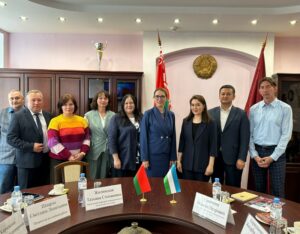
From 27 to 30 July 2026, an official delegation of the Uzbekistan State Institute of Arts and Culture paid a working visit to the Republic of Belarus. The visit was organized as a practical continuation of the agreements reached during the official visit of the President of the Republic of Uzbekistan, Shavkat Mirziyoyev, to Belarus, as well as the negotiations held by the delegation led by the Minister of Culture of the Republic of Uzbekistan, Ozodbek Nazarbekov.
The primary objective of the visit was to study Belarusian best practices in the digital transformation of education, the application of modern information technologies and artificial intelligence in the cultural sector, the expansion of inter-university cooperation, and the development of joint educational and research initiatives.
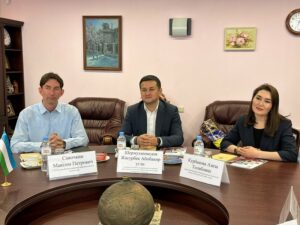
The Institute’s delegation included Maksim Savochkin, Head of the Center for Digital Educational Technologies, and Aziza Kurbanova, Head of the Department of Information Technologies, Doctor of Technical Sciences (DSc), Associate Professor. The delegation also included Jasurbek Shermuhammedov, Head of the Department for Digitalization and Artificial Intelligence Development of the Ministry of Culture of the Republic of Uzbekistan.
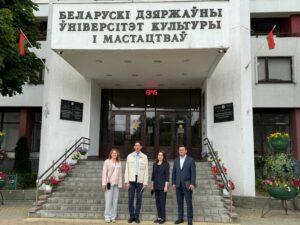
During the visit, the delegation became acquainted with the activities of the Belarusian State University of Culture and Arts, the A.K. Glebov Minsk State Art College, and the Belarusian State University of Informatics and Radioelectronics (BSUIR).
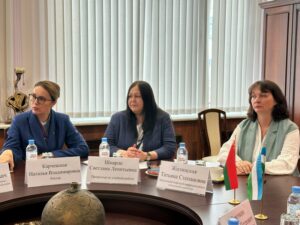
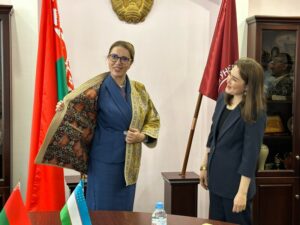
At the Belarusian State University of Culture and Arts, the delegation was welcomed by Rector Natalya Karchevskaya, Vice Rector for Academic Affairs Svetlana Shparlo, Vice Rector for Research Elena Korsakova, Head of the International Relations Department Vadim Samatiya, Deputy Head of the Academic and Methodological Department Elena Kiseleva, Head of the Information Technologies and Technical Teaching Aids Department Igor Levin, and Head of the Department of Information Technologies in Culture Tatyana Zhilinskaya.
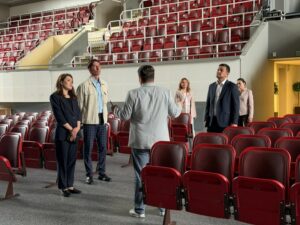
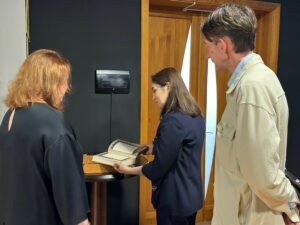
The delegation visited the University’s Sports and Cultural Center, museum, library, and modern computer laboratories, where they studied the institution’s educational infrastructure and experience in developing a digital learning environment. The parties discussed educational digitalization, the training of highly qualified specialists for the cultural sector, and the integration of information and communication technologies and artificial intelligence into the educational process. Prospects for faculty and student exchanges, summer schools, internships, joint scientific conferences, and other collaborative educational initiatives were also considered.
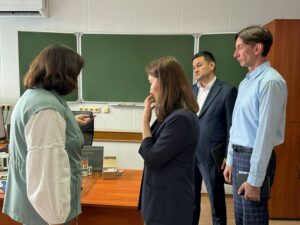
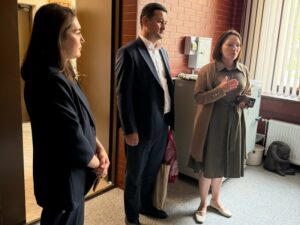
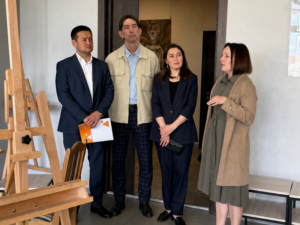
Later that day, the delegation visited the A.K. Glebov Minsk State Art College, where they met with the College Director Aleksandr Shantarovich. Lecturer Yuliya Sergeyeva introduced the delegation to the college’s classrooms, specialized workshops, and creative laboratories. Particular interest was shown in the College’s practice-oriented approach to training specialists in graphic design, multimedia design, and animation design, as well as its application of modern digital technologies in art education.
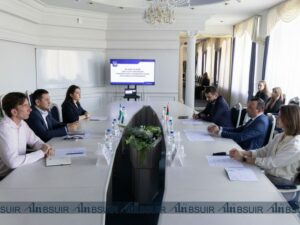
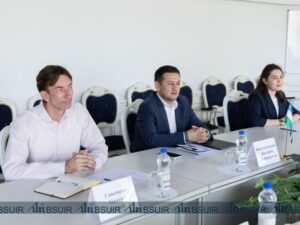
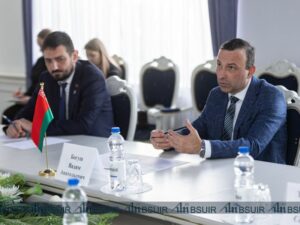
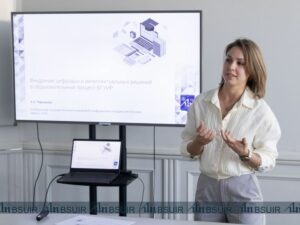
On 29 July, the delegation visited the Belarusian State University of Informatics and Radioelectronics (BSUIR) and met with Rector Vadim Bogush, Head of the Educational Services Promotion Center Andrey Ushkurov, and Deputy Head of the Distance Education Development Center Anna Tereshkova.
During the meeting, the parties exchanged experience in digital education, the training of highly qualified specialists, academic mobility, and the integration of modern information technologies and artificial intelligence solutions into the educational process.
The delegation expressed particular interest in BSUIR’s academic programmes in Electronic Marketing, Digital Marketing, Information Management Systems, Artificial Intelligence, and Information Systems and Technologies (Information Systems and Technologies in the Game Industry).
The Belarusian side expressed its readiness to support faculty development, student internships, joint educational programmes, scientific conferences, and collaborative research and educational projects. These agreements create new opportunities for the digital transformation of the educational process at the Uzbekistan State Institute of Arts and Culture and the implementation of advanced digital technologies.
The outcomes of the visit have opened new prospects for strengthening cooperation with leading Belarusian higher education institutions, expanding academic mobility, and implementing joint educational and research initiatives. Most importantly, the visit became another practical step toward implementing the agreements reached at the level of the leadership of both countries and their respective ministries.